 English
 Spanish
 French
 Bengali
 Russian
 Arabic
 Turkish
Introduction
Thematerial thicknessin roll forming plays a crucial role indetermining profile accuracy, machine settings, die design, and overall production efficiency. Choosing the right material thickness ensuresoptimal forming performance, minimal defects, and extended machine life.
But how do youselect the right thickness for roll forming applications? What are thebest practices for adjusting machine settings based on material thickness?
In this guide, we’ll explore: ✅How material thickness impacts roll forming ✅Recommended thickness ranges for different metals ✅How to adjust roll forming machines for different thicknesses ✅Common problems caused by incorrect material thickness ✅How to optimize roll forming for thin and thick materials
Let’s dive intothe critical role of material thicknessin roll forming and how tooptimize your production for maximum efficiency in 2025!
How Material Thickness Affects Roll Forming
Material thickness directly influencesforming force, bending behavior, die design, and energy consumptionin roll forming machines. Below are the key effects of material thickness on roll forming:
1. Bending & Spring-Back Behavior
- Thicker materialsrequirehigher forming forceand areless flexible, leading toless spring-back.
- Thinner materialsexperiencemore spring-back, requiringadditional roller passesfor accuracy.
2. Machine Load & Roller Wear
- Thicker metalsincreaseroller pressure, leading tohigher wear and tearon dies.
- Proper lubricationis crucial for maintainingroller longevitywhen forming thick materials.
3. Profile Accuracy & Edge Quality
- Thin materialsare more sensitive toroller misalignment, leading toedge waviness or distortions.
- Thicker materialsrequireprecise roller clearance settingsto preventover-bending or cracking.
4. Energy & Speed Adjustments
- Thicker materials require slower forming speedsto preventexcessive stress and cracking.
- Thinner materials can be formed at higher speeds, but requiretighter control over roller pressure.
Pro Tip:Correct material thickness selection can improve forming accuracy by up to 30%!
Recommended Material Thickness Ranges For Roll Forming
Different metals haveunique forming properties, requiringspecific thickness rangesfor optimal performance. Below is a comparison ofrecommended material thicknesses for different metals.
| Material Type | Recommended Thickness Range (mm) | Best Applications |
|---|---|---|
| Mild Steel | 0.3mm – 6.0mm | Structural components, roofing sheets |
| Stainless Steel | 0.5mm – 3.0mm | Automotive, aerospace, medical equipment |
| Aluminum | 0.3mm – 5.0mm | Lightweight structures, HVAC, enclosures |
| Galvanized Steel | 0.4mm – 4.0mm | Corrosion-resistant frames, construction materials |
| Copper & Brass | 0.2mm – 2.5mm | Electrical components, decorative trim |
Pro Tip:Stainless steel requires tighter roller tolerances due to its higher strength and tendency to spring back!
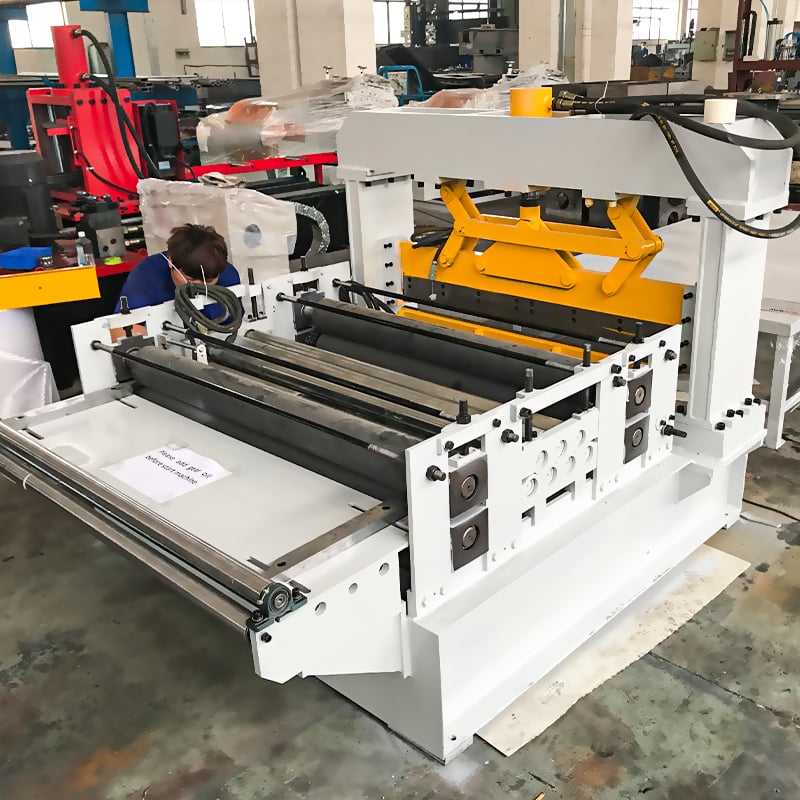
Sheet metal forming equipment
How To Adjust Roll Forming Machines For Different Thicknesses
To ensureoptimal roll forming performance, machines must beadjusted based on material thickness. Below are thekey machine settings that must be optimized:
1. Roller Clearance Adjustment
✅ Ensurerollers match material thicknessto preventover-bending or under-forming. ✅ Useadjustable roller standsto fine-tune clearance settings for each thickness.
2. Forming Pressure & Speed Control
✅Thicker materials require lower forming speedsto preventcracking and excessive force buildup. ✅Thinner materials need precise pressure controlto preventwrinkles and distortions.
3. Die Design & Pass Configuration
✅More gradual forming passesare needed forthicker materialsto avoidstress concentration. ✅Thinner materials require additional support rollersto preventbuckling.
4. Lubrication & Cooling Adjustments
✅Higher thickness requires increased lubricationto reduce friction and prevent roller wear. ✅Cooling systems help manage heat buildupwhen formingthicker metals at slow speeds.
Pro Tip:Proper machine adjustments for material thickness can extend roller lifespan by 40%!
Common Roll Forming Problems Caused By Incorrect Material Thickness
Incorrect material thickness can lead toproduction defects, machine wear, and increased scrap rates. Below arecommon roll forming problems and their solutions.
| Problem | Cause | Solution |
|---|---|---|
| Edge Cracking | Forming pressure too high for material thickness | Reduce forming pressure, use more forming passes |
| Spring-Back Issues | Thin materials bending beyond tolerance | Adjust roller clearance, add extra support rollers |
| Surface Wrinkling | Insufficient support for thin materials | Increase roller contact, adjust forming speed |
| Excessive Roller Wear | Thick material generating too much friction | Increase lubrication, use hardened steel rollers |
| Incorrect Profile Dimensions | Material too thick or too thin for machine settings | Adjust roller clearance, recalibrate forming passes |
Pro Tip:80% of roll forming defects are caused by incorrect material thickness adjustments!
Best Practices For Roll Forming Thick & Thin Materials
Different strategies must be used when roll formingthin and thick materialstooptimize forming accuracy and reduce defects.
Roll Forming Thin Materials (0.2Mm – 2.5Mm)
✅ Useadditional support rollersto prevent material buckling. ✅ Increaseforming speed, butcontrol forming pressureto prevent distortions. ✅ Applylight lubricationtoreduce friction without excessive buildup.
Roll Forming Thick Materials (3.0Mm – 6.0Mm+)
✅ Usegradual bending anglesto preventstress concentration and cracking. ✅ Reduceforming speedto allowmaterial to flow smoothly without excessive force. ✅ Applyheavy-duty lubricationtominimize roller wear and heat buildup.
Pro Tip:Thicker materials require more forming passes to avoid excessive stress buildup!
Tomaximize efficiency, reduce defects, and ensure high-quality production, manufacturers must implementadvanced techniquesfor handling different material thicknesses. Below are themost effective strategiesto improve roll forming performance based on material thickness.
1. Adaptive Roller Design For Different Thicknesses
- Adjustable roller standsallowquick thickness modifications without downtime.
- Multi-stage rollersensuresmooth transitions between forming passes, preventing stress buildup.
- Dynamic roller pressure controloptimizesbending accuracy for both thin and thick materials.
2. AI-Powered Thickness Monitoring
- AI-driven sensorscontinuously measure material thicknessin real-time.
- Automatically adjustsroller pressure, forming speed, and die clearancefor optimal performance.
- Helpsdetect material inconsistencies early, reducing scrap rates.
3. High-Precision CNC Die Fabrication
- Computer-controlled die manufacturingensurestight tolerances for different material thicknesses.
- Reduceshuman errorand improvesforming repeatability.
- Allows forquick die changeovers, improving production efficiency.
Pro Tip:AI-powered thickness monitoring can reduce material waste by up to 25%!
How To Optimize Roll Forming Speed Based On Material Thickness
Theforming speedmust be adjusted based onmaterial thicknessto preventcracking, distortion, or roller wear. Below is a comparison ofoptimal forming speedsfor different thickness levels.
| Material Thickness | Recommended Forming Speed (m/min) | Key Adjustments |
|---|---|---|
| 0.2mm – 1.0mm (Thin Sheet Metal) | 20 – 60 m/min | High-speed forming, reduce roller pressure |
| 1.0mm – 3.0mm (Medium Thickness) | 10 – 30 m/min | Balanced speed, controlled roller clearance |
| 3.0mm – 6.0mm (Thick Steel) | 5 – 15 m/min | Slow speed, increased lubrication |
| 6.0mm+ (Heavy Gauge Steel) | 2 – 10 m/min | Maximum roller pressure, gradual forming passes |
Pro Tip:Thinner materials can be formed at higher speeds, but require precise roller control to avoid defects!
How To Reduce Material Waste In Roll Forming Based On Thickness
Material waste increasesproduction costs and reduces efficiency. Below are strategies tominimize scrap rates and improve yieldbased on material thickness.
1. Optimize Roller Gap & Alignment
✅ Ensureroller clearance matches material thicknessto preventprofile distortions. ✅ Usecalibrated alignment toolsto maintainconsistent forming accuracy.
2. Implement Smart Lubrication Systems
✅Thicker materials require more lubricationto reduce friction and prevent roller wear. ✅Thin materials need precise lubrication controlto avoid excess buildup and contamination.
3. Use CNC Precision Cutting For Accurate Length Control
✅ CNC-controlled cutting systems ensureexact profile lengths. ✅ Reducesmaterial overuse and scrap production.
Pro Tip:Optimizing roller alignment can reduce material waste by up to 20%!
Common Roll Forming Challenges With Thick & Thin Materials
Handling different material thicknesses can posevarious challenges. Below arecommon problems and their solutions.
| Problem | Cause | Solution |
|---|---|---|
| Cracking in Thick Materials | Excessive forming pressure | Use gradual bending angles, reduce pressure |
| Wrinkling in Thin Materials | Insufficient roller support | Increase roller contact, optimize forming speed |
| Excessive Spring-Back | High-strength materials bending beyond tolerance | Adjust roller clearance, use more forming passes |
| Edge Distortion | Roller misalignment | Recalibrate rollers, optimize forming pressure |
| Roller Wear on Thick Materials | High friction & poor lubrication | Use hardened rollers, apply precision lubrication |
Pro Tip:80% of forming defects are caused by incorrect machine adjustments—regular calibration is key!
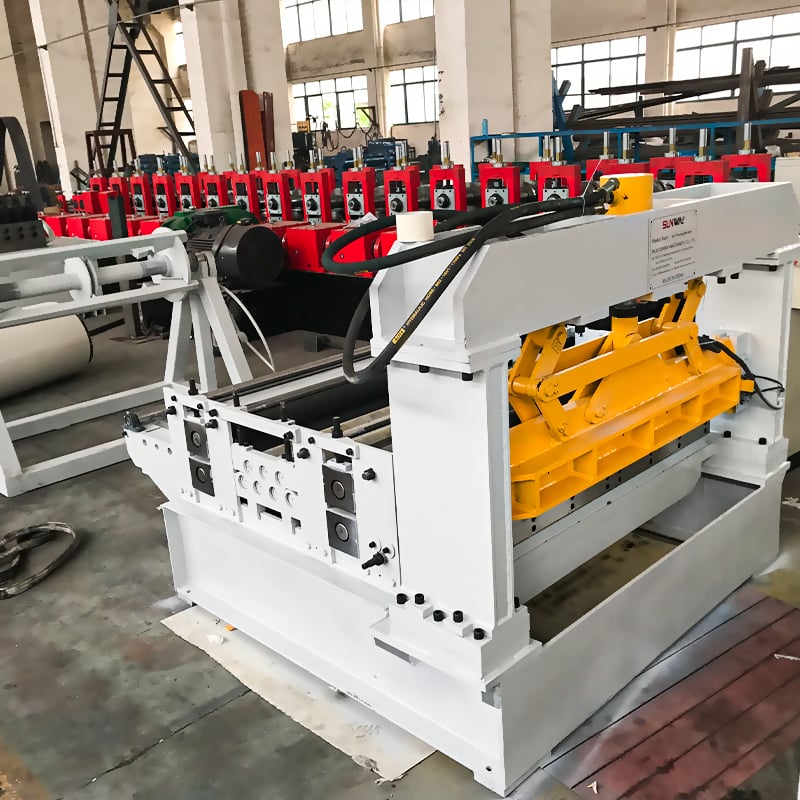
Sheet metal forming equipment
Best Practices For Roll Forming Machines Handling Multiple Thicknesses
To efficiently process materials ofvarying thicknesses, follow thesebest practices:
1. Use Variable Roller Pressure Systems
✅ Adjustroller force dynamically based on material thickness. ✅ Preventsover-compression for thin materials and under-forming for thick metals.
2. Implement Quick-Change Tooling Systems
✅ Usemodular die designsto switch between thicknesseswithout excessive downtime. ✅ Reducesproduction delays and increases efficiency.
3. Invest In Adaptive Forming Technology
✅AI-driven forming systemsautomatically adjust rollerclearance, speed, and pressure. ✅ Ensuresconsistent forming quality across different thicknesses.
4. Maintain Proper Cooling & Lubrication Control
✅Thicker materials generate more heat, requiringadvanced cooling systems. ✅Thin materials need controlled lubricationto preventsurface contamination.
Pro Tip:Adaptive forming technology can improve production speed by up to 30%!
1. What Is The Thickest Material That Can Be Roll Formed?
- Most roll forming machines can handleup to 6.0mm thick steel, while specialized machines can form materialsup to 10mm thick.
2. How Do I Prevent Material Cracking When Forming Thick Steel?
- Usegradual bending angles,optimize forming pressure, and ensureproper lubrication.
3. What Adjustments Should I Make When Switching From Thin To Thick Materials?
- Adjustroller clearance,forming pressure, andspeed settingsbased on thickness.
- Usemodular tooling for quick adjustments.
4. Why Do Thin Materials Wrinkle During Roll Forming?
- Wrinkling occurs whensupport rollers are insufficient. Increaseroller contact pointsto stabilize material flow.
5. Where Can I Buy Roll Forming Machines That Support Multiple Material Thicknesses?
Forcustom-built roll forming machines, visitWUXI SUNWAY MACHINERY CO., LTD.
Choosing the rightmaterial thicknessis essential forhigh-precision, defect-free roll forming. Byoptimizing machine settings, using proper lubrication, and adjusting forming passes, manufacturers canreduce defects, improve production efficiency, and extend machine life.
WUXI SUNWAY MACHINERY CO., LTDis aleading global manufacturerofcustom-built roll forming machines, offeringadvanced technology, expert support, and competitive pricing.
Want to optimize yourroll forming process?Contact us today!