 English
 Spanish
 French
 Bengali
 Russian
 Arabic
 Turkish
Introduction
No matter how advanced yourroll forming machineis, problems can still arise. A small issue—if left unresolved—can lead tomisaligned profiles, production slowdowns, or even complete machine failure.
So, how do you quickly diagnose and fix roll forming machine issues?
In this guide, we’ll cover: ✅Common roll forming machine problems and how to fix them ✅Step-by-step troubleshooting guide for operators ✅Preventive measures to reduce downtime ✅How to optimize machine efficiency and performance
Let’s dive into themost frequent roll forming machine issues and expert solutions!
Common Roll Forming Machine Issues & Solutions
Even well-maintained machines can experiencemisalignment, material jamming, or roller wear. Below are the mostfrequent roll forming machine issuesandhow to fix them.
Troubleshooting Guide For Common Roll Forming Problems
| Issue | Possible Causes | Solution |
|---|---|---|
| Profile Misalignment | Roller positioning errors, worn bearings, loose guiding system | Re-calibrate roller stations, tighten guide rails, replace worn bearings |
| Material Jamming in Rollers | Poor material feeding, incorrect thickness, misaligned rolls | Adjust material feeder, check material specs, realign rollers |
| Uneven Forming or Profile Distortion | Incorrect roller spacing, varying material thickness | Adjust roller spacing, use high-quality material |
| Excessive Roller Wear | Lack of lubrication, high-friction material | Apply proper lubrication, use wear-resistant rollers |
| Surface Scratches on Formed Profiles | Dirty rollers, excessive forming pressure | Clean rollers, adjust forming pressure |
| Hydraulic Cutting System Malfunctions | Low hydraulic fluid levels, clogged filters | Refill hydraulic fluid, clean filters |
| Inconsistent Cutting Lengths | Faulty sensor calibration, worn cutting blades | Recalibrate sensors, replace worn blades |
| Machine Overheating | Excessive friction, poor cooling system | Ensure proper lubrication, inspect cooling fans |
Pro Tip:80% of roll forming failures are due to improper lubrication and roller misalignment—regular inspections prevent costly downtime!
Step-By-Step Roll Forming Machine Troubleshooting Guide
If your roll forming machine is not producingprecise, high-quality profiles, follow thisstructured troubleshooting approach.
Step 1: Identify The Problem
✅Observe the machinewhile running. Listen forunusual soundsor vibrations. ✅ Inspectformed profilesforbends, distortions, or scratches. ✅ Check thefeeding systemfor jams or misalignment.
Step 2: Inspect The Rollers & Alignment
✅ Look formisaligned rollersoruneven pressure application. ✅ Ensure roller gaps arecorrectly adjusted for material thickness. ✅ Clean dirty rollers thatmay cause surface defects.
Step 3: Check Lubrication & Bearings
✅ Inspectbearings and chainsfor adequate lubrication. ✅ Applyhigh-quality lubricantsto preventroller wear and excessive friction.
Step 4: Verify Cutting & Punching Systems
✅ Checkhydraulic fluid levelsin cutting and punching systems. ✅ Ensure sensors arecalibrated for accurate cutting lengths. ✅ Inspectwear and tear on cutting blades.
Step 5: Test The Electrical System & PLC Controls
✅ Look forfaulty sensors, wiring, or PLC programming errors. ✅ ResetCNC or PLC controlsto factory settings if needed.
Pro Tip:Systematically troubleshooting your roll forming machine can reduce repair time by 50%!
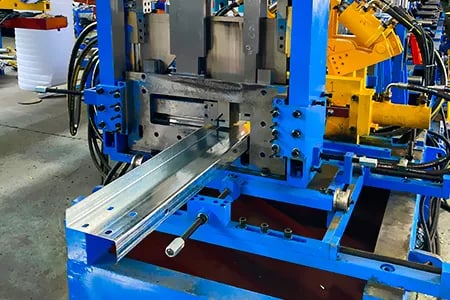
Cutting unit on a metal forming line
Preventive Measures To Reduce Downtime
The best way toavoid troubleshootingis toprevent issues before they happen. Follow thesebest practicesto keep your roll forming machine running efficiently.
1. Perform Regular Machine Inspections
- Check rollers, bearings, and cutting mechanismsweekly.
- Look forloose bolts, misalignment, or worn-out parts.
2. Maintain A Strict Lubrication Schedule
- Applyhigh-quality industrial lubricantsto rollers and bearingsweekly.
- Preventsoverheating, excessive friction, and premature roller wear.
3. Keep Rollers Clean And Well-Aligned
- Dirt and debris on rollerscause surface scratches and profile defects.
- Regular cleaningimproves product quality and extends roller lifespan.
4. Use High-Quality Raw Materials
- Poor-quality metal sheetsincrease roller wearand cause misalignment.
- Chooseuniform-thickness, rust-free materialsfor optimal performance.
5. Train Operators On Proper Machine Handling
- Many roll forming problems are caused byoperator errors.
- Ensure staffunderstands machine controls, troubleshooting, and maintenance procedures.
Pro Tip:Preventive maintenance reduces unexpected breakdowns by up to 75%!
How To Optimize Roll Forming Machine Efficiency
Ahighly efficient roll forming machineproducesconsistent, high-quality profileswithminimal waste and downtime.
Key Strategies To Improve Efficiency
✅Upgrade to Servo-Driven Motors– Improves speed control, reduces energy consumption. ✅Implement AI-Based Monitoring Systems– Detects defects in real-time, prevents material waste. ✅Use IoT-Enabled Remote Monitoring– Tracks machine performance and schedules maintenance. ✅Invest in High-Quality Tooling– Reduces roller wear and ensures precise profile shaping.
Upgrading to AI-powered defect detection can improve efficiency by 30% and reduce downtime by 50%!
Even with preventive maintenance,mechanical and operational problemscan arise in roll forming machines. Advanced troubleshooting techniques can help diagnose complex issuesbefore they cause major disruptions.
1. Diagnosing And Fixing Machine Vibration Issues
- Cause:Loose bolts, misaligned rollers, or worn-out bearings.
- Solution: ✅ Tighten all bolts and ensure the frame is stable. ✅ Check roller alignment and recalibrate if necessary. ✅ Replace worn-out bearings and lubricate moving parts.
2. Fixing Inconsistent Profile Dimensions
- Cause:Improper roller pressure, material stretching, or incorrect CNC settings.
- Solution: ✅ Adjust roller pressure to avoid excessive bending. ✅ Use high-quality, uniform-thickness materials. ✅ Verify and recalibrate CNC programs for accuracy.
3. Resolving Hydraulic System Failures
- Cause:Low hydraulic fluid, air bubbles in the system, or clogged filters.
- Solution: ✅ Refill hydraulic fluid and check for leaks. ✅ Bleed the system to remove air bubbles. ✅ Clean or replace clogged hydraulic filters.
Pro Tip:Hydraulic failures account for 30% of production downtime—regular fluid checks can prevent costly repairs!
How To Prevent Roll Forming Machine Overheating
Overheating canreduce machine efficiency, cause material defects, and shorten component lifespan.
Key Causes Of Overheating & Solutions
| Cause | Solution |
|---|---|
| Lack of lubrication | Regularly apply high-quality lubricants to rollers and bearings. |
| Excessive friction due to misalignment | Recalibrate rollers and ensure smooth material feeding. |
| Blocked ventilation or cooling system failure | Clean cooling fans and ensure proper airflow. |
| Overworking the machine beyond its rated capacity | Reduce production speed and allow machine cooldown periods. |
Pro Tip:Proper lubrication and cooling system maintenance can extend machine lifespan by 40%!
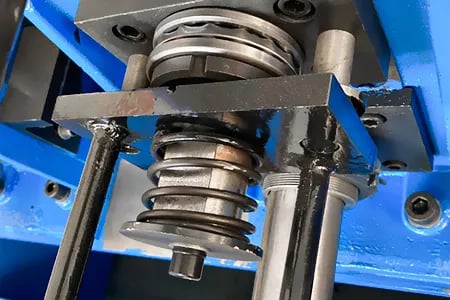
Close-up of forming rollers and shafts
How To Optimize Roll Forming Machine Performance
Awell-optimized roll forming machineensuresmaximum efficiency, reduced waste, and consistent product quality.
1. Implement Iot-Based Machine Monitoring
- IoT sensors trackreal-time machine performance.
- Enablespredictive maintenance, reducing unexpected failures.
2. Use AI-Powered Defect Detection
- AI cameras monitor profiles forreal-time quality control.
- Prevents material waste bydetecting defects early.
3. Upgrade To Servo-Driven Motors
- Providesprecise speed controlandreduces energy consumption.
- Extendsroller and motor lifespan.
4. Automate Profile Adjustments
- CNC-controlledautomatic profile changeoversreduce downtime.
- Enhancesproduction flexibility.
Upgrading to AI and IoT-based systems can improve efficiency by 30% and reduce downtime by 50%!
1. How Can I Prevent My Roll Forming Machine From Overheating?
- Ensureproper lubricationandclean ventilation systems.
- Reduce production loadif the machine is being overworked.
2. Why Is My Roll Forming Machine Making Excessive Noise?
- Loose components, worn-out bearings, or roller misalignment may be the cause.
- Solution:Tighten bolts, replace worn bearings, and realign rollers.
3. How Do I Fix Irregular Bending Angles In My Roll Forming Profiles?
- Checkroller pressure settingsandensure uniform material thickness.
- Verify CNC programming for correctbending sequences.
4. Can Automation Improve Roll Forming Machine Performance?
- Yes!CNC automation, AI defect detection, and IoT monitoringsignificantly improveaccuracy and efficiency.
5. Where Can I Buy Reliable Roll Forming Machines And Replacement Parts?
Forcustom-built roll forming machines and spare parts, visitWUXI SUNWAY MACHINERY CO., LTD.
Aproperly maintained and well-optimized roll forming machineensureshigh efficiency, minimal downtime, and consistent product quality. By followingstructured troubleshooting techniques, you canquickly diagnose and resolve issues, keeping your production line runningsmoothly and profitably.
WUXI SUNWAY MACHINERY CO., LTDis aleading global manufacturerofcustom-built roll forming machines, offeringadvanced technology, expert support, and competitive pricing.
Want ahigh-quality roll forming machine?Contact us today!