 English
 Spanish
 French
 Bengali
 Russian
 Arabic
 Turkish
Overview OfC Section C Frame Roll Forming Machine
C section C frame roll forming machines are used to produce structural steel members with a C-shaped cross section for the construction industry. The C section profiles provide excellent strength for framing applications.
This guide covers C frame roll former working principles, main components, specifications, production line configurations, tooling accessories, applications in construction and pre-engineering building, benefits, top manufacturers, cost analysis, purchasing considerations, maintenance tips and FAQs.
Working Principle Of C Frame Roll Forming
The operating sequence of a C section C frame roll forming line is:
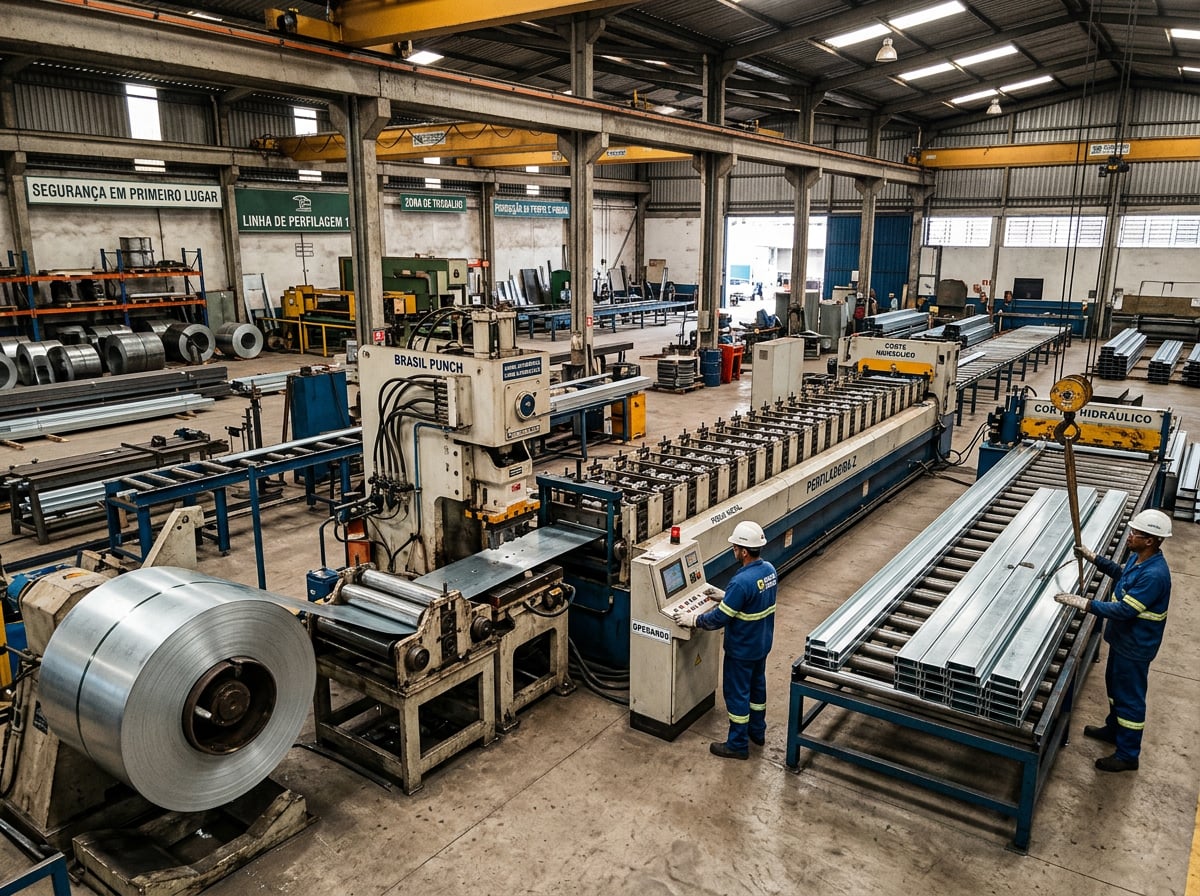
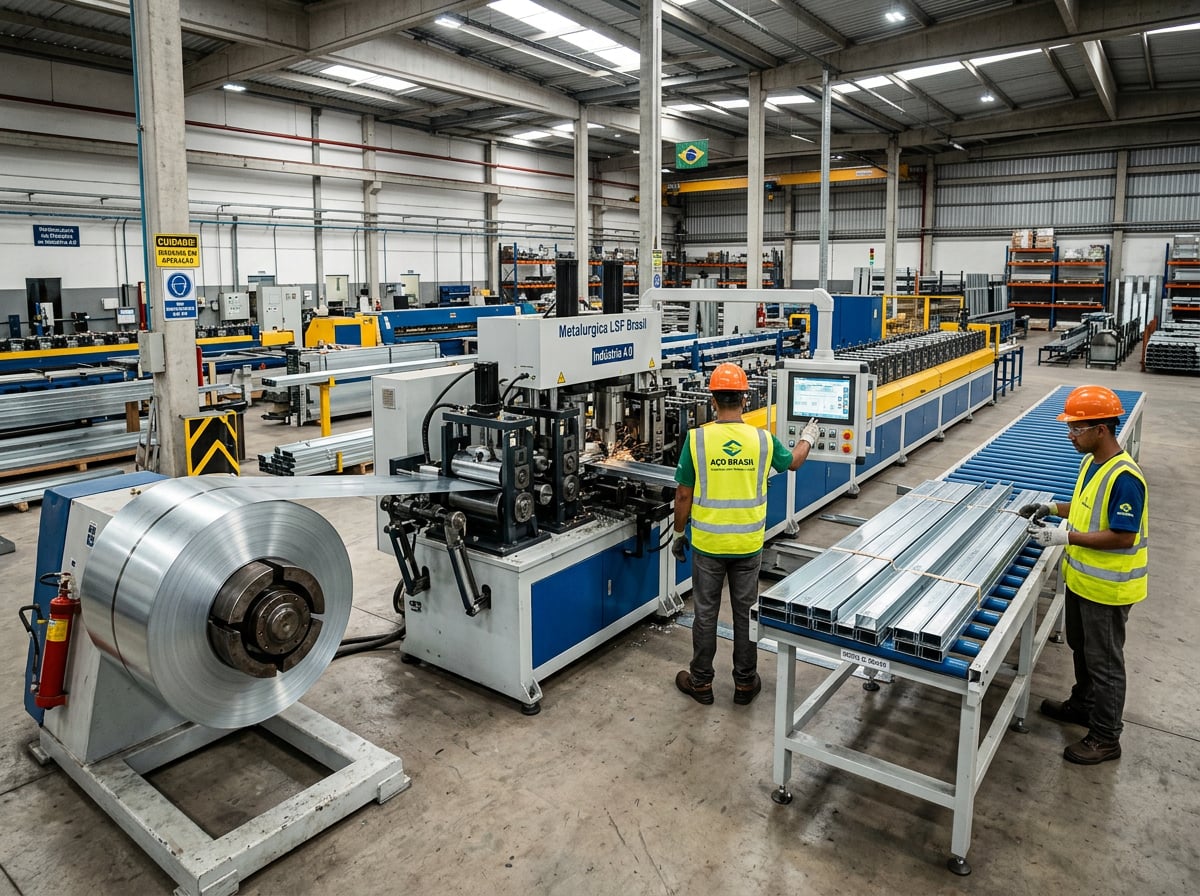
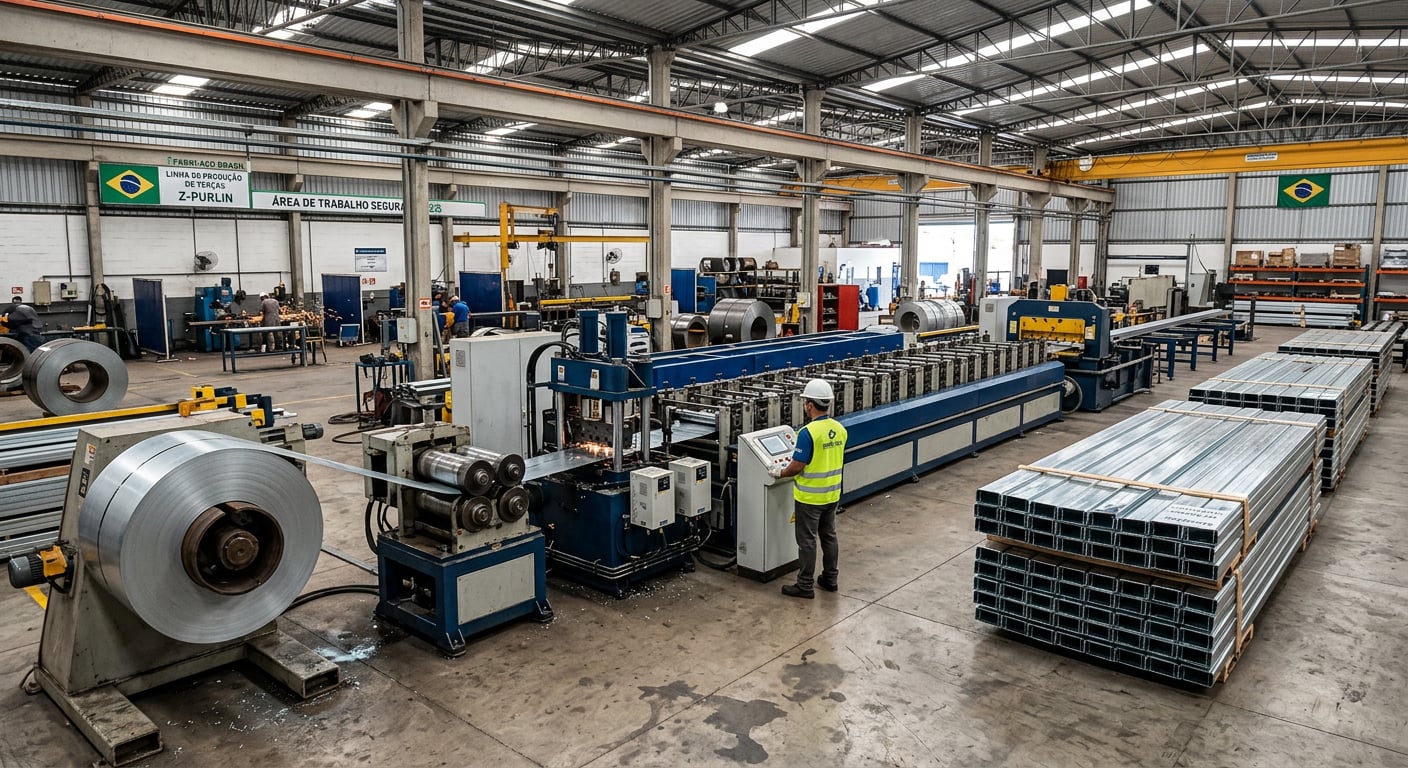
- Coil of steel sheet loaded into the de-coiler
- Sheet enters leveler machine for initial flattening
- Leveled sheet fed into the entry guides
- Sheet passes through sequential rolling stations
- Forming rollers gradually bend the steel sheet into C shape
- Finished C section exits on to the cutting table
- Cutter shears the profile to desired length
- Conveyor stacks cut parts for bundling
- Hydraulic motors coupled to gearboxes drive the roll stations
- PLC automated control synchronizes the components
The gradually bending steps produce uniform C sections with excellent surface finish and dimensional accuracy.
Main Components Of C Frame Roll Former
Key components of aC section C frame roll forming machineinclude:
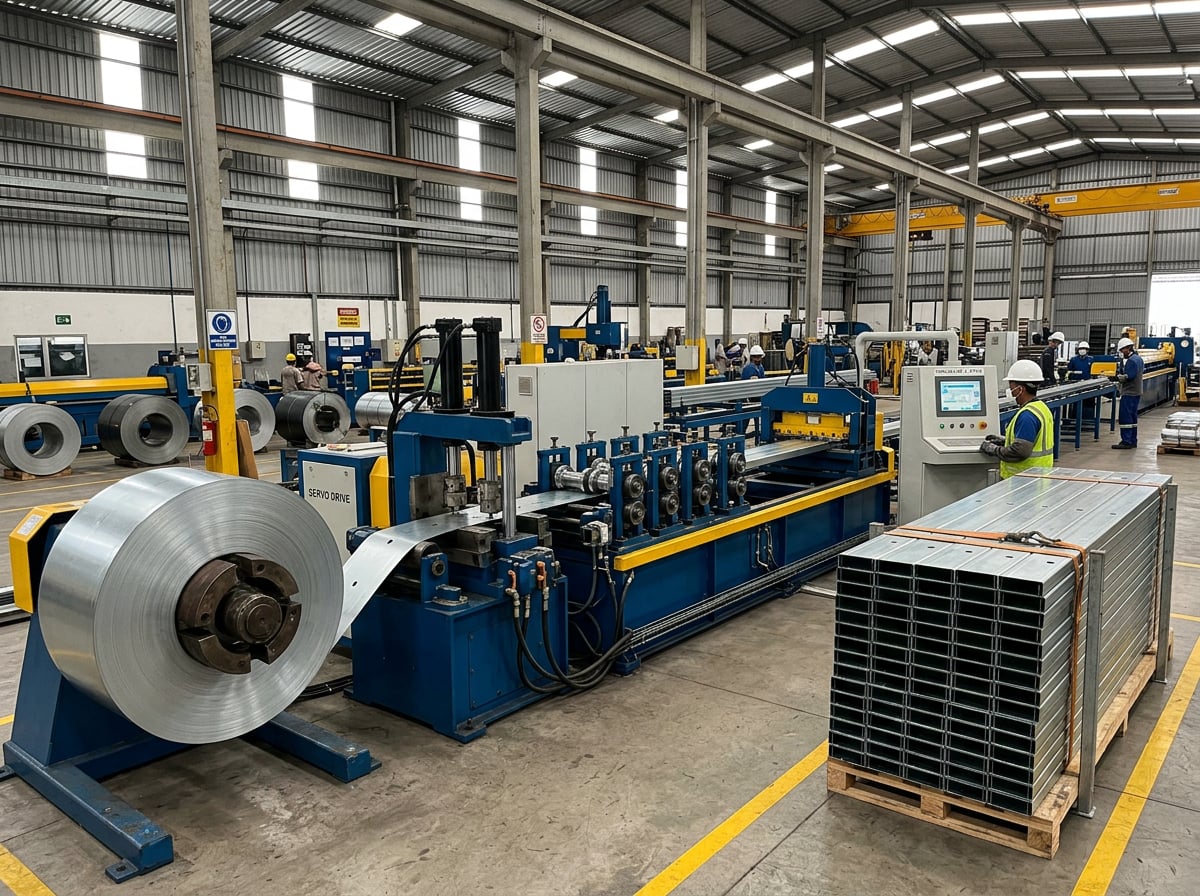
- De-coiler– Holds and feeds the steel coil
- Feeder– Feeds sheet into the line
- Leveler– Flattens sheet prior to forming
- Roll forming stations– Bend sheet in steps
- Roll tooling– Machined to C profile shape
- Cutting unit– Shears cut profiles to length
- Stacking table– Collects finished C sections
- Bundling system– Straps cut parts into bundles
- Electrical controls– PLC, HMI, AC drives
- Safety guarding– For operator protection
Precisely aligned components produce uniform, quality C sections.
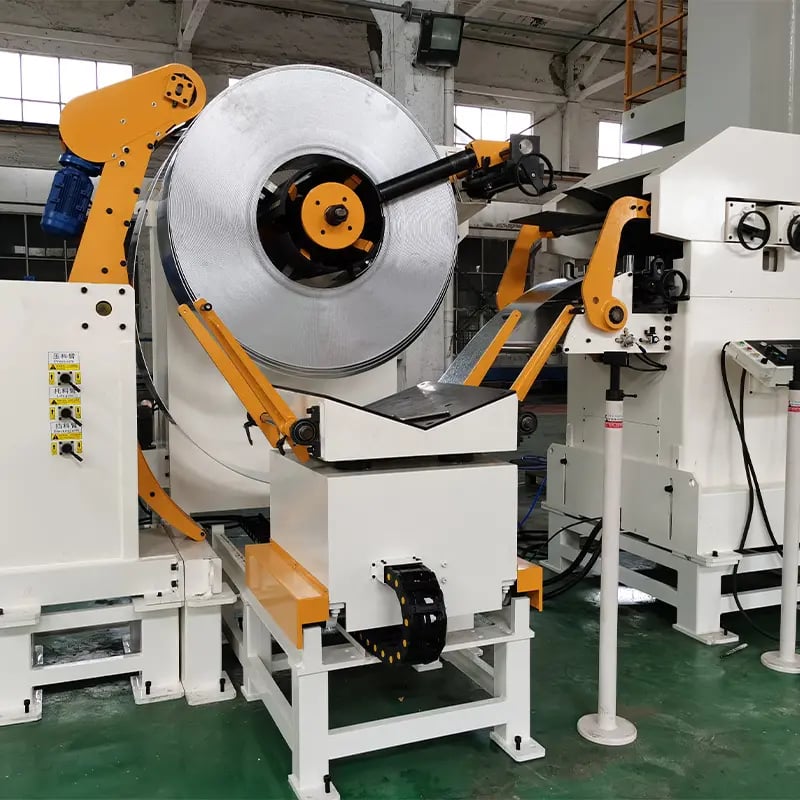
Decoiler and coil feeding equipment
Specifications Of C Frame Roll Formers
Typical specifications of C frame roll forming machines:
| Parameter | Specification |
|---|---|
| Roller diameter | 100-180 mm |
| Max. line speed | 35 m/min |
| Min sheet thickness | 1.2 mm |
| Max sheet thickness | 3 mm |
| Sheet width | 750-1250 mm |
| C section height | 100-300 mm |
| Cut lengths | 2-12 meters |
| Main motor | 11-55 kW |
| Voltage | 380-415V, 50/60Hz, 3Phase |
Larger roller diameters allow forming heavier material. More powerful motors yield higher production rates.
Types Of C Frame Sections Produced
Common C frame section sizes produced on these roll formers:
- C purlins – 100 to 300 mm
- Metsec Metric C sections – 2MC to 14MC
- A/HBox beams – All standard sizes
- Miscellaneous – Custom C profiles
Quick roll change systems allow various C section sizes to be interchanged easily.
C Frame Roll Former Configurations
Typical C frame roll former line configurations:
- Compact– Entry guides to cutter in one frame
- Modular– Separate modules bolted together
- In-line– Straight from one end to other
- L-shaped– Saves space
- Double decoiler– For quick coil change
- Closed-loop– Exits to coiler side
- Servo-electric– Precision servo motor drives
- Custom– Tailored layouts to needs
Layouts are designed to optimize material flow, space and production requirements.
Tooling Accessories For C Frame Rollers
Tooling enhancements for C frame roll forming machines:
- Quick change– Fast roll set swaps
- Punching– Hole punching attachment
- Embossing– Pattern rolls for decorative finishes
- Notching– Edge notching attachment
- Bending– Rails for bending into arcs
- Double sheet– Split rolls for dual sheets
- Roll protection– Guards against damage
- Roll ramps– Ease feeding of thick sheets
- Roll levellers– Ensure concentricity
Tooling expands the range of profiles and features possible.
Applications Of C Frame Sections
Typical applications of C frame profiles:
- Roof joists– Rafters, purlins, eaves
- Wall studs– External and internal framing
- Structural supports– Columns, braces
- Mezzanine flooring– Platforms, walkways
- Building frames– Shell structure
- Trusses– Roof and floor truss chords
- Solar racking– Mounting structure members
- Shelving– Uprights, braces
- Stair stringers– Supports, handrails
C sections provide excellent strength-to-weight ratio for structural applications.
Benefits Of C Frame Roll Forming
Key benefits of C frame roll forming lines:
- High productivity– Up to 35 meters per minute
- Material savings– Zero scrap from C-shaped structure
- Consistency– Dimensional accuracy better than other methods
- Flexible– Produce wide range of C sections
- Cost-effective– Lower investment than structural mill
- Compact– Small footprint, easy installation
- Safety– Fully enclosed guards for protection
- Sustainable– Major energy and carbon reduction
C sections produced on roll formers rival structural mills in quality and performance at a fraction of investment cost.
Leading Manufacturers Of C Frame Roll Formers
Prominent global suppliers ofC section C frame roll forming machinesinclude:
- Cloudnine– Feature rich heavy-duty roll formers
- Zhongfu– Advanced German engineering standards
- Jupiter Roll Forming– Customized production lines
- RollMax– Precision C sections up to 550 mm
- Formtek– Servo-electric lines for speed and accuracy
- Gasparini– Robust Italian-made roll forming machines
Cost Analysis
Typical cost considerations for C frame roll forming lines:
- Type and size– Larger, automated lines cost more
- Speed and efficiency– Directly affects pricing
- Material thickness– Machines for thicker sheets cost extra
- Quick change features– Adds expense but saves time
- Additional tooling– Varies based on profiles needed
- Installation and training– Often included in price
- Freight and logistics– Extra depending on delivery location
Total Acquisition Cost–$80,000 to $500,000+
Higher production capability warrants bigger investment to maximize productivity gains.
Buying Considerations
Key factors to consider when buying C frame roll forming machines:
- Size and thickness range of C sections required
- Estimated production volume and annual output
- Level of automation features preferred
- Available installation space for the line
- Planned operating shifts per day
- Operator skill level and training needs
- Expected part dimensional precision
- Future tooling needs and line expansion
- Local technical support capability
Thoroughly analyzing present and future needs ensures ideal equipment selection.
Maintenance Tips
Recommended maintenance practices for C frame roll formers:
- Daily cleanup of metal debris and excess lubricant
- Checking oil levels in gearboxes and hydraulics
- Inspecting roll tooling condition and replacing worn items
- Verifying hydraulic seals, hoses, fittings are not leaking
- Confirming electrical wiring and connections are tight
- Monitoring belt tension and chains for stretch
- Testing emergency stop and safety circuits
- Documenting maintenance activities and part changes
Proper maintenance improves uptime, output consistency and operator safety.
Troubleshooting Common Problems
Troubleshooting tips for C frame roll forming issues:
Profile distortion
- Check roll alignment and spacing
- Replace any damaged or worn rolls
- Adjust roll pressure as needed
Cut sections out of alignment
- Check alignment of cutting blade
- Inspect sensor positioning
Uneven line speed
- Test servo motors and drives
- Check for slipping belts or chains
Hydraulic power loss
- Inspect cylinders, valves and pumps
- Check oil level and filter
- Tighten any leaking fittings
Machine jamming
- Increase lubrication
- Clear any debris in stations
- Verify no loose machine parts
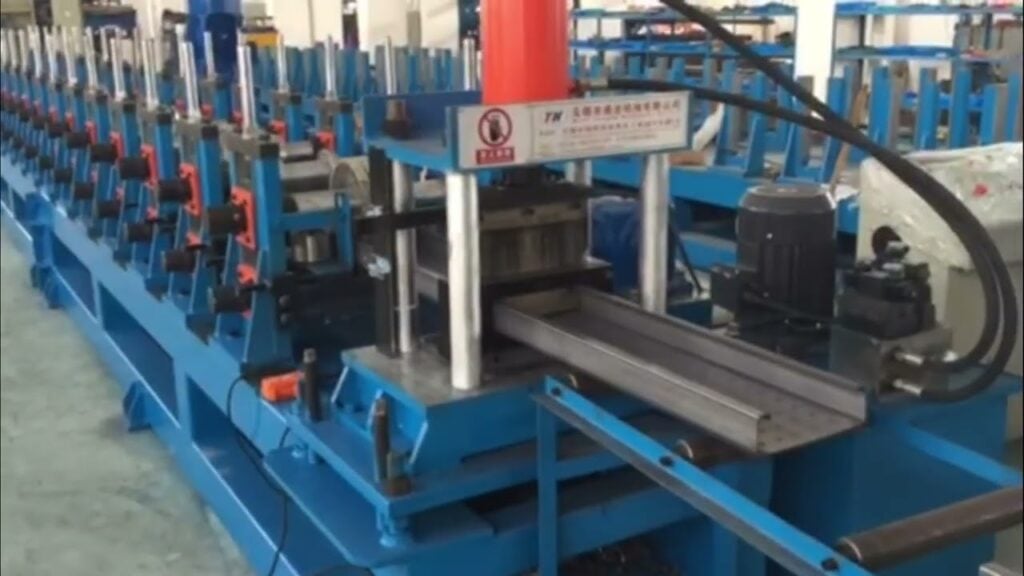
Cutting unit on a metal forming line
Faqs
What sizes of C sections can be produced?
Common ranges are 100 to 300 mm height, 1.5 to 3 mm thickness, and 750 to 1250 mm width capacities. Larger sizes are also possible.
What materials can the C frame roll former process?
Most commonly galvanized steel, also pre-painted steel, stainless steel or aluminum. Mild steel is the most cost-effective choice.
What thickness of sheets can be formed?
Standard C frame roll formers accommodate 1.2 to 3 mm material thickness. Special models for thicker sheets are available.
What is the typical output speed?
25-35 meters per minute is standard for most C frame roll forming lines. Speeds vary based on part size and features.
What length of C sections can be produced?
Standard roll former cutting lengths range from 2 to 12 meters. Extended lengths can be achieved by adding additional rolling stations.
Conclusion
C section C frame roll forming lines deliver high precision structural steel profiles at productivity rates unmatched by other methods. When specifying C frame roll forming equipment, manufacturers must assess both current and future part needs in terms of sizes, thicknesses, volumes, and tooling flexibility. Investing in a roll former sized appropriately for production demand can yield rapid payback through material savings, reduced labor, and energy efficiency versus other fabrication approaches.